A research-design perspective
The Double Diamond for a PhD thesis
A design-process lens for transforming a broad research gap into a focused question and a meaningful doctoral thesis.
Discover → Define → Develop → Deliver
Written by Yizhou Ma · Assistant Professor, Wageningen University
01 · The framework
Research as a design process
The Double Diamond represents a design process with four phases that alternate between divergent exploration and convergent synthesis.
A PhD repeatedly moves between broad exploration and focused synthesis to transform emerging possibilities into defensible research decisions.
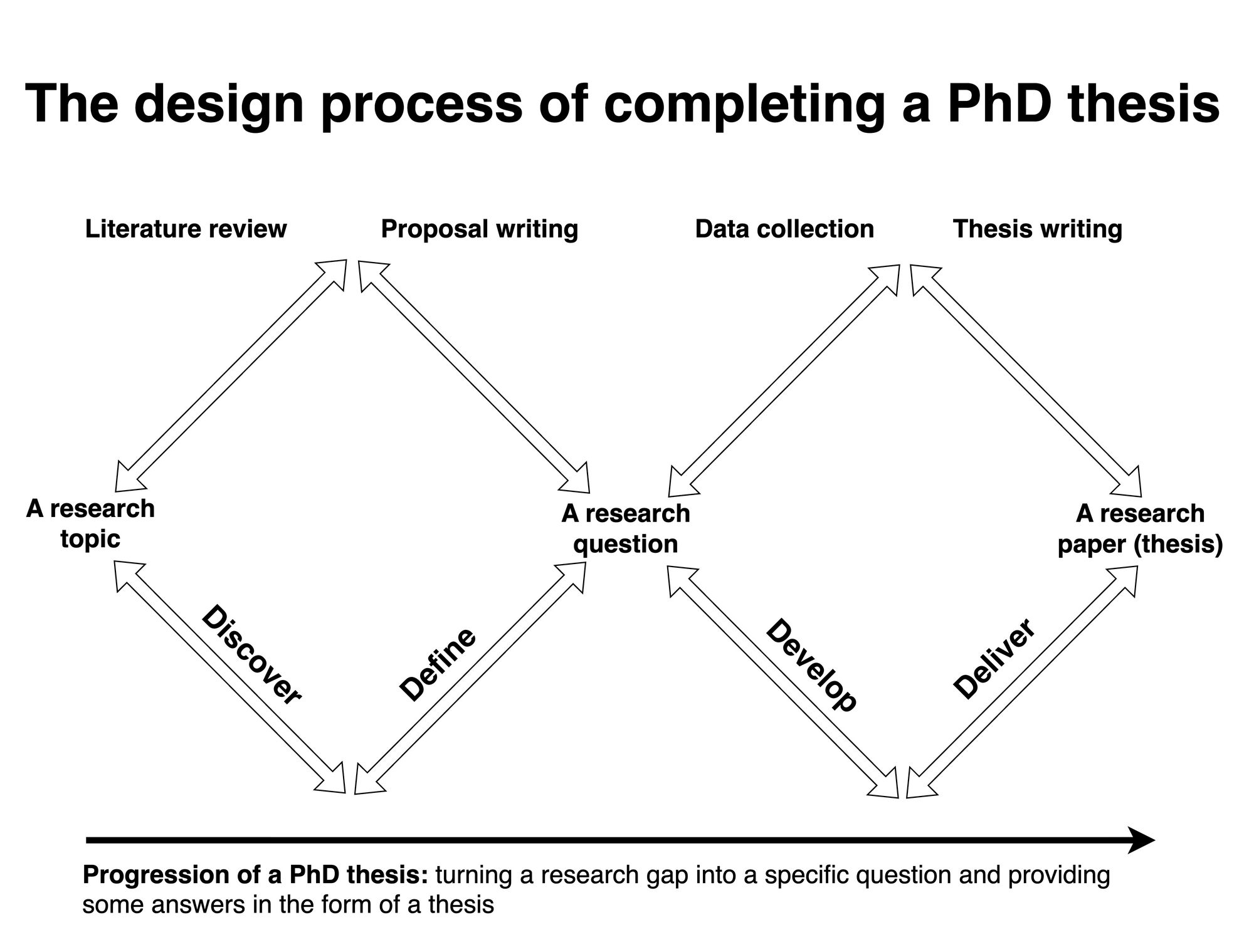
Discover
The discover phase seeks to understand the problem through engagement with people and processes that are directly affected by the issue.
Define
Insights gathered during discovery support the definition of a specific research challenge that can be examined from a new perspective.
Develop
A clearly defined challenge may support several solutions, which can be developed collaboratively by engaging experts with complementary perspectives.
Deliver
Potential solutions are validated before the best-performing approach is packaged and delivered to the users who need it most.
02 · A narrow perception
Beyond the “lab rat” and “paper mill” perception
The visible phases of research, including data collection and paper writing, can overshadow the question-forming work that gives both activities meaning.
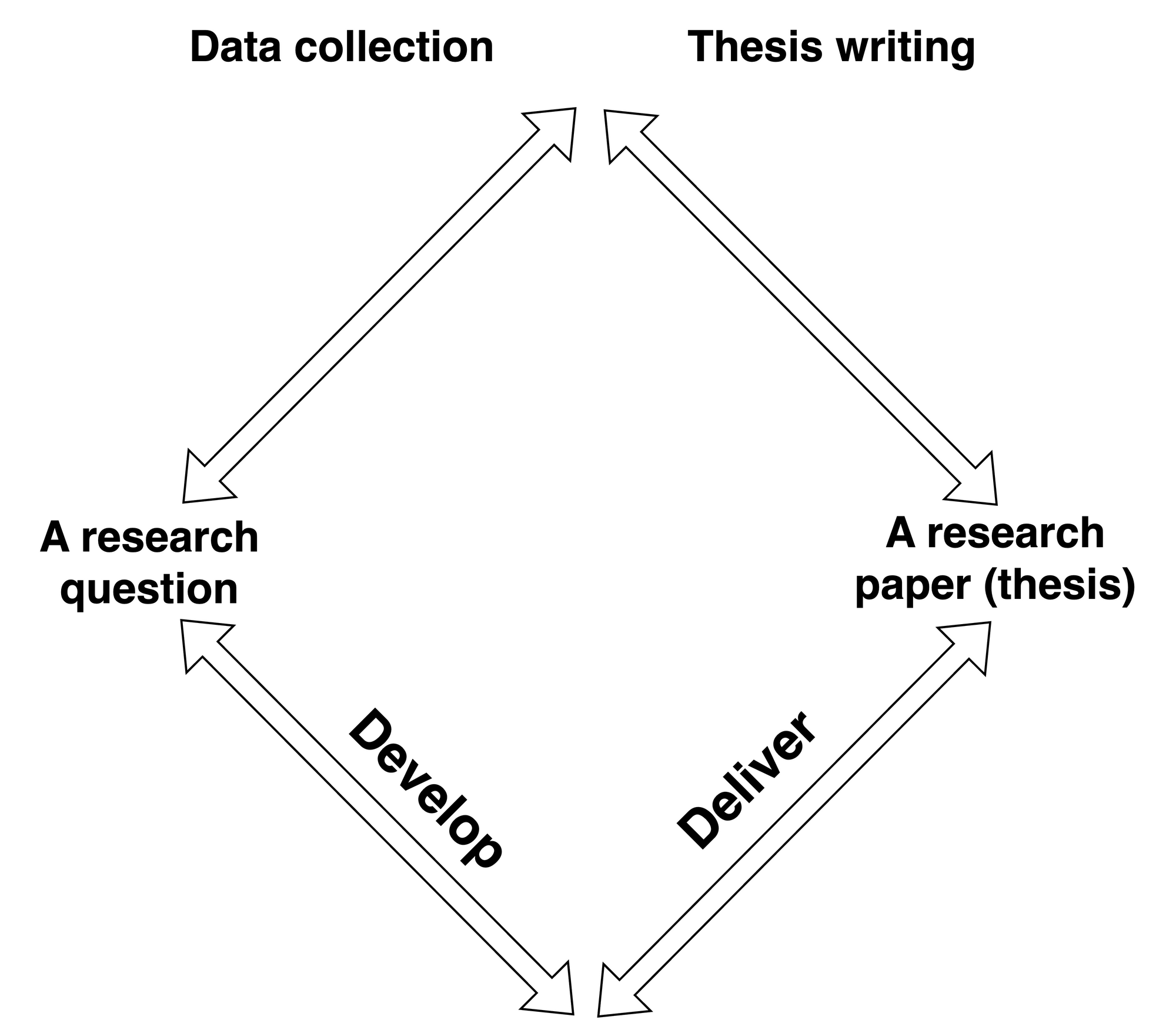
The perceived research process
Oftentimes, we associate research with collecting data in laboratories and the field, and writing papers as preparation for future scientists.
These activities can reinforce a narrow stereotype of doctoral research that emphasizes long working hours and extensive data collection.
What the system rewards
Many training resources are organised around these objectives, including laboratory training, programming workshops, and scientific-writing support provided by universities.
The academic environment rewards development through data collection and delivery through research papers, which can encourage incoming PhD students to prioritize laboratory work and publication.
This shortened diamond hides the upstream work of discovering a worthwhile topic and defining the right research question.
03 · Loss in divergence
Activity without meaningful progress
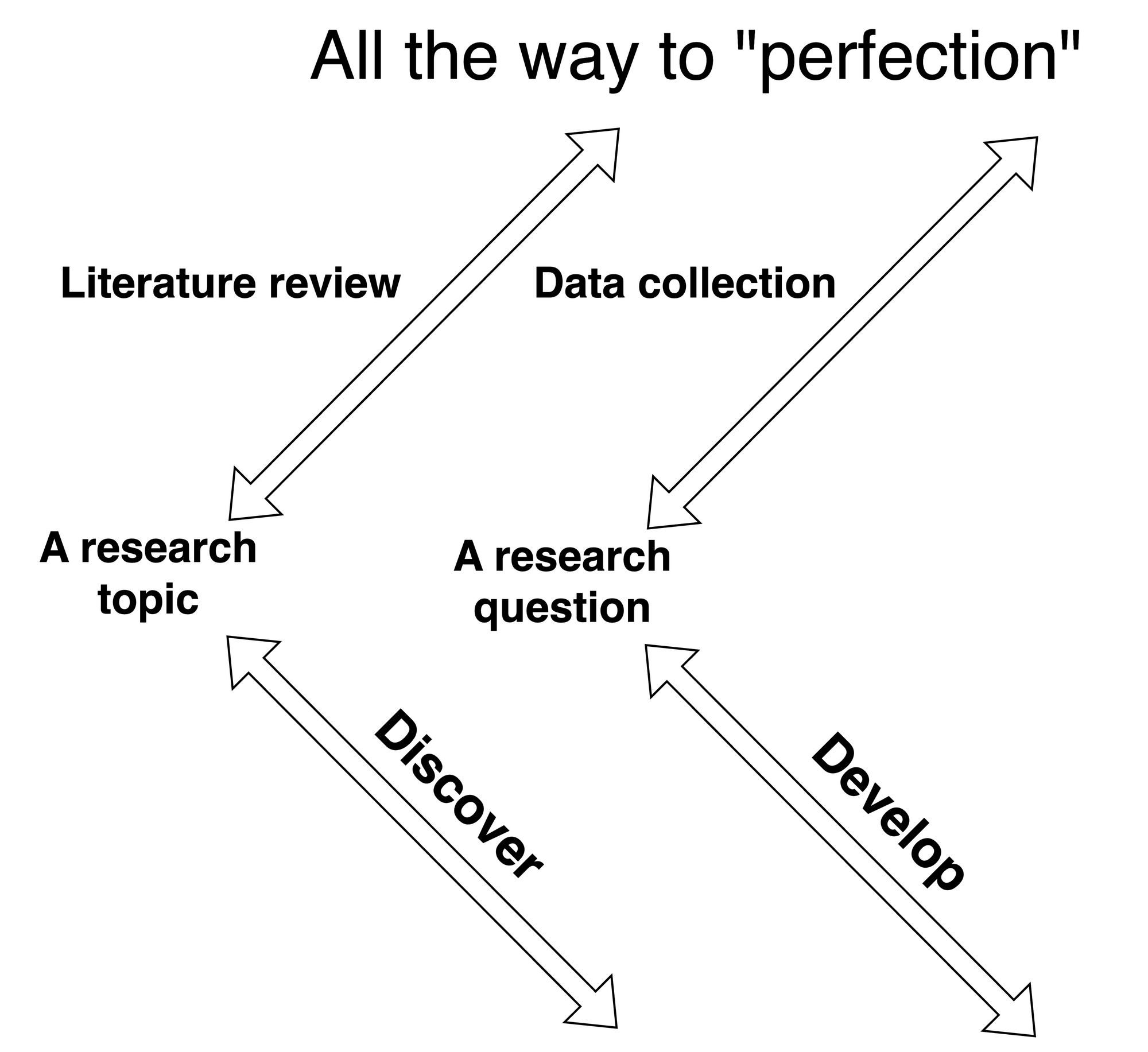
The fear of not doing enough
PhD progression contains two divergent phases, covering discovery through literature review and development through experimental data collection.
During these phases, PhD students broaden their knowledge across topics and conduct experiments to generate relevant data.
Quantifiable results support project management, but they can also intensify concerns about insufficient progress that are associated with impostor syndrome.
The garden maze
Reading literature and conducting experiments can become “addictive” during divergent phases because many research directions and scientific methods appear worth pursuing.
PhD students can become lost in this garden maze of divergent activity and lose focus on the research questions or gaps they initially identified.
Without explicit convergence, a project can continue expanding while the central research question and resulting thesis remain insufficiently resolved.
04 · Failure to converge
Protected time for synthesis
A prolonged focus on divergent activity can reduce the time available for proposing research questions and writing papers, which both require synthesis.
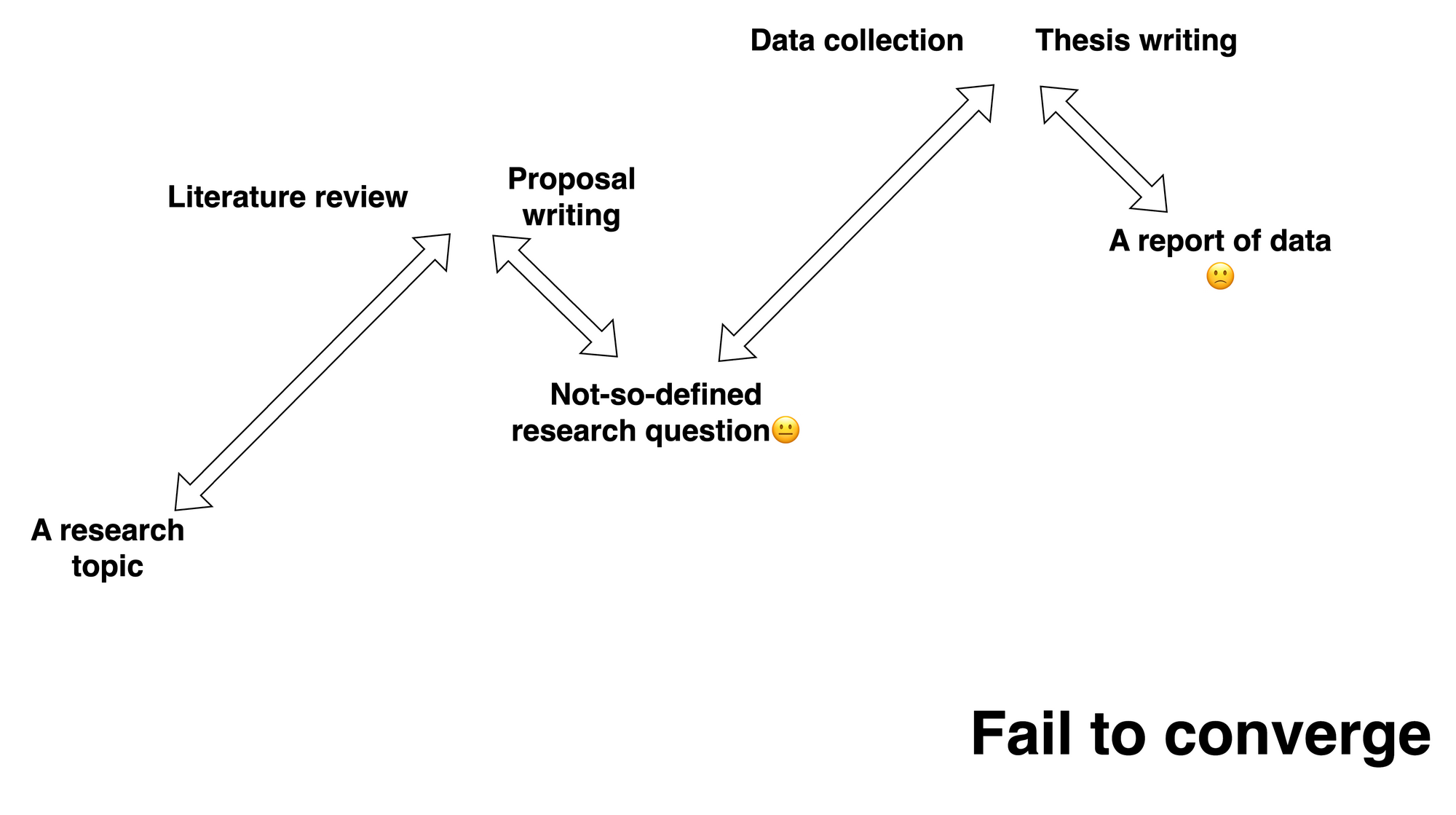
Defining the right question
During the define phase, literature sources must be organised into themes to reveal patterns and opportunities for new research.
This iterative process requires repeated thinking and rethinking before a coherent and defensible research question can be established.
Defining the right research question is often the most challenging part of a PhD thesis because divergent activities create numerous distractions.
Writing more than a data report
Convergence returns during delivery because manuscript writing requires researchers to analyse and synthesise study data into a coherent narrative with scientific significance.
In many applied fields, there is a fine line between a research article and a report of data.
A strong research article therefore requires deeper discussion and more critical analysis of the reported experimental data.
“Far better an approximate answer to the right question, which is often vague, than an exact answer to the wrong question, which can always be made precise.” — John Tukey